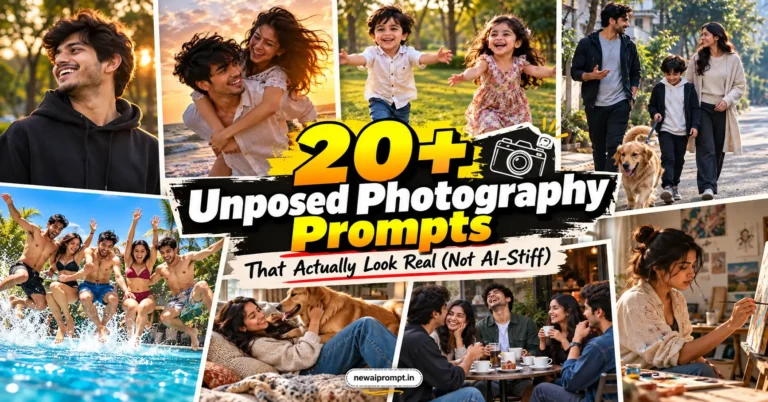
Most AI portrait prompts produce the same result: a person standing dead-center, staring into the lens, arms locked at their sides, lit like a passport photo. That’s the opposite of what “unposed” means. An unposed photography prompt is built to make the AI generate a moment, not a stance — someone mid-laugh, mid-step, or looking somewhere other than the camera.
Every prompt below is written to work with a reference photo. Upload a photo of yourself (or the people you want in the shot), paste the prompt, and the AI will keep your face and identity while placing you in the candid scene described. If your tool doesn’t accept a reference photo, a quick note further down shows you how to adapt any prompt for text-only generation instead.
What Actually Makes a Prompt Look “Unposed”
Before the prompt list, it helps to know why some candid-style prompts still come out looking stiff. Four things separate a genuinely unposed result from a posed one wearing a candid label:
- An action, not a stance. “Standing and smiling” is a pose. “Turning to laugh at someone off-frame” is a moment. Give the subject something to do, react to, or move through.
- Broken eye contact. Direct eye contact with the lens is the single biggest giveaway of a posed shot. Describe the subject looking down, sideways, at another person, or mid-blink instead.
- Imperfect framing. Off-center subjects, partial crops, and slightly uneven horizons read as documentary. Dead-center symmetry reads as studio.
- A reason for the moment to exist. “Laughing” alone is vague. “Laughing because they just tripped on the curb” gives the model a cause, and the resulting expression and body language follow logically instead of looking generic.
You don’t need all four in every prompt, but hitting at least two usually pushes a result from “AI portrait” to “photo of a person.”
Solo Portrait Prompts
1. Caught Off Guard, Golden Hour
Puts the subject mid-laugh at something happening outside the frame, which avoids the flat, camera-aware smile most AI portraits default to.
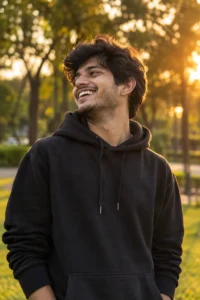
Keep the face, skin tone, and proportions from the attached photo unchanged. Generate a candid photo of this person standing in a park at golden hour, caught mid-laugh at something off to their left, head slightly tilted back, hair catching the low sunlight. Shot from a slight low angle on a 50mm lens, shallow depth of field, background softly blurred with trees. Natural warm light, no direct eye contact with the camera, documentary photography style.
Best for: Instagram profile photos and casual portrait sets.
2. Walking Away, Glancing Back
Movement plus a broken gaze does most of the work here — the subject isn’t posing for the shot, they’re mid-departure.
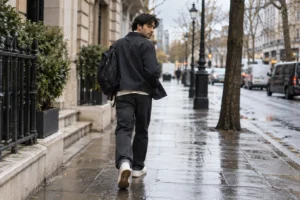
Use the attached photo as the identity reference and don’t alter this person’s build or features. Generate a candid street photo of them walking away from the camera down a quiet city sidewalk, glancing back over their shoulder mid-stride, jacket slightly moving with the motion. Shot on a 35mm lens from behind and to the side, overcast daylight, muted color palette, slight motion blur in the back foot, unposed street photography style.
Best for: Cover photos and editorial-style feeds.
3. Reading by the Window
The subject is engaged in an activity rather than facing the lens, which is one of the fastest ways to get a natural expression.
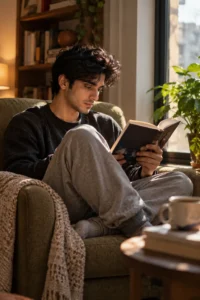
Match this person’s face and identity to the uploaded reference photo throughout. Generate a candid indoor portrait of them sitting curled up in an armchair by a window, fully absorbed in a book, soft natural daylight falling across their face and hands, unaware of the camera. Shot on an 85mm lens, shallow depth of field, warm muted tones, quiet lifestyle photography style, no eye contact with the lens.
Best for: Cozy lifestyle content and blog imagery.
4. Mid-Motion, Adjusting Hair
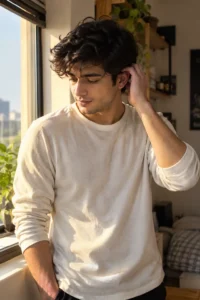
Small physical gestures like this read as unscripted because they’re the kind of thing people do between poses, not for the camera.
Base this on the attached photo and keep the same face, hair, and skin texture. Generate a candid portrait of this person standing near a sunlit window, caught mid-motion tucking their hair behind their ear, eyes looking down and slightly away from the camera, soft window light creating gentle shadow on one side of their face. Shot on a 50mm lens at a three-quarter angle, natural skin texture, unposed editorial photography style.
Best for: Headshots that still feel personal rather than corporate.
Couple Prompts
5. Whispering a Joke
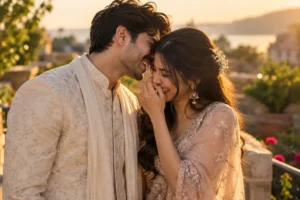
Two-person interactions are naturally less “posed” than solo shots because the subjects are reacting to each other instead of the camera.
Using the attached reference photo, keep both people looking like themselves — same faces, same build. Generate a candid photo of them standing close together outdoors, one leaning in to whisper something to the other, both mid-laugh, foreheads nearly touching, eyes closed or looking at each other rather than the camera. Golden hour lighting, shot on a 35mm lens with a slightly wide frame, soft background blur, genuine unposed emotion, documentary wedding photography style.
Best for: Engagement or anniversary photos.
6. Walking Hand in Hand, From Behind
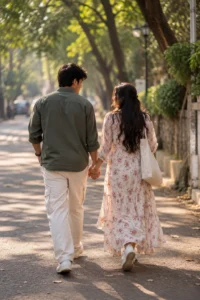
Shooting from behind removes the possibility of a posed expression entirely, which is a reliable trick when a prompt keeps producing stiff faces.
Take the two people from the attached photo and carry over their hair, build, and clothing style. Generate a candid photo of them walking hand in hand down a tree-lined street, shot entirely from behind, mid-stride, heads turned slightly toward each other as if talking. Soft afternoon light, shallow depth of field on a 50mm lens, natural color grade, documentary lifestyle photography style, no faces visible to the camera.
Best for: Wide banner images and blog headers.
7. Cooking Together
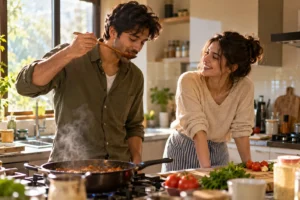
Domestic, in-progress activities give an AI model a built-in reason for the pose to look imperfect — hands are busy, attention is elsewhere.
Reference the attached photo for both faces and keep their identities consistent. Generate a candid indoor photo of them cooking together in a sunlit kitchen, one tasting food from a spoon while the other laughs and leans against the counter, mid-conversation, neither looking at the camera. Warm natural window light, shot on a 35mm lens, slightly cluttered countertop for realism, lifestyle documentary photography style.
Best for: Lifestyle brand content and relationship-focused feeds.
8. Piggyback, Mid-Laugh
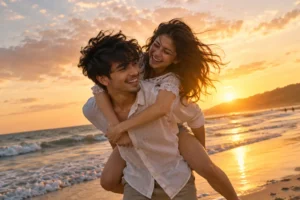
This kind of physical, off-balance moment is almost impossible to fake as a pose, which is exactly why it reads as authentic.
Stay true to the two faces in the attached photo without changing their features. Generate a candid outdoor photo of one giving the other a piggyback ride on a beach at sunset, both laughing, hair and clothing caught mid-motion by the wind, slight motion blur. Shot on a 24mm lens from a slightly low angle, warm backlight, unposed and playful, documentary photography style.
Best for: Fun, high-energy social posts.
Family Prompts
9. Kids Running Toward the Camera
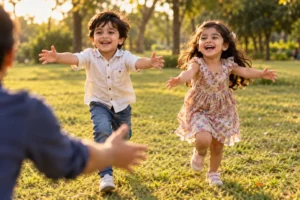
Genuine motion blur on a moving subject is one of the strongest unposed signals an AI model can render — it implies the shot was reactive, not staged.
Keep the children’s faces from the attached photo exactly as they appear. Generate a candid photo of them running across a grassy park toward an off-camera parent, arms outstretched, mid-laugh, hair and clothes moving with the motion, slight natural motion blur on their legs. Shot on a 35mm lens at eye level with the children, soft afternoon light, warm color palette, documentary family photography style.
Best for: Family photo albums and holiday cards.
10. Grandparent and Child, Card Game
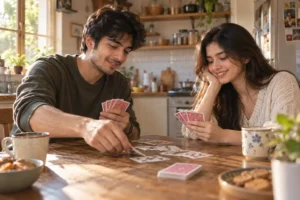
Both subjects are focused on a shared object rather than the lens, which naturally produces relaxed, concentrated expressions.
Pull both faces from the attached photo and keep them unaltered. Generate a candid indoor photo of them sitting at a wooden kitchen table playing cards, both fully focused on the game, soft afternoon light through a nearby window, natural unretouched skin texture. Shot on a 50mm lens, shallow depth of field on the cards in the foreground, warm nostalgic tones, documentary lifestyle photography style.
Best for: Heartfelt family storytelling content.
11. Morning Dog Walk
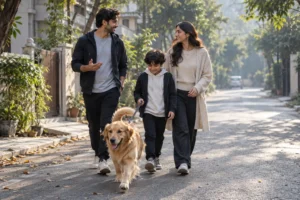
A background activity like walking a dog gives the family something to do besides look at the camera, which keeps the composition loose and natural.
Use the attached photo as the likeness reference for everyone in the family. Generate a candid photo of them walking a golden retriever down a quiet residential street in early morning light, the dog slightly pulling ahead on the leash, the parents mid-conversation and the child looking down at the dog. Shot on a 35mm lens, soft cool morning light, muted color palette, unposed street-style family photography.
Best for: Everyday lifestyle content and local brand imagery.
12. Toddler Lifted Into the Air
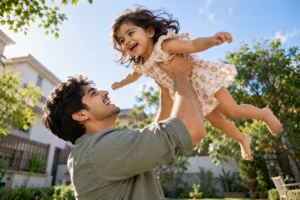
The physical action of being lifted forces genuine, spontaneous expressions that a static “smile at the camera” prompt can’t reliably produce.
Carry over the parent’s and child’s exact features from the attached photo. Generate a candid backyard photo of the parent lifting the child into the air, both mid-laugh, the child’s arms and legs slightly kicking with excitement, hair caught in motion. Shot on a 24mm lens from a low angle looking slightly upward, bright natural daylight, shallow depth of field, joyful documentary family photography style.
Best for: High-emotion, shareable family moments.
Friends and Group Prompts
13. Laughing Around a Café Table

Group shots benefit from staggering attention — not everyone looking the same direction, which is what real candid group photos actually look like.
Draw every face in this scene from the attached group photo, kept true to life. Generate a candid photo of them sitting around a small café table outdoors, mid-conversation, one person laughing with their head tilted back, another gesturing with their hands, coffee cups scattered on the table. Shot on a 35mm lens at eye level, soft overcast daylight, natural color grade, documentary lifestyle photography style, no one looking directly at the camera.
Best for: Group hangout content and café or restaurant marketing.
14. Walking Down the Street, From Behind
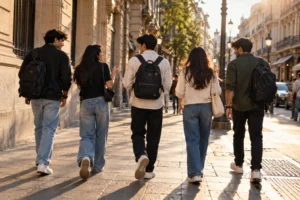
As with the couple shot above, a rear angle on a group removes any chance of a stiff, camera-aware lineup.
Match hair, build, and clothing for each person to the attached reference photo. Generate a candid photo of the group walking down a city street shot from behind, mid-stride, one person mid-gesture while talking, uneven spacing between them for a natural, unstaged feel. Shot on a 28mm lens, late afternoon light with long shadows, documentary street photography style.
Best for: Travel content and friend-group social posts.
15. Jumping Into the Pool

Action mid-flight is about as far from “posed” as a prompt can get, and it produces a lot of natural variation in expression and body position.
Keep everyone’s identity locked to the attached photo, even mid-motion. Generate a candid photo of the group mid-jump into a pool, caught in the air with water splashing beneath them, genuine surprised and excited expressions, sunlight creating water droplets catching the light. Shot on a 50mm lens with a fast shutter feel, bright midday sun, high-energy documentary photography style.
Best for: Summer campaigns and high-energy lifestyle content.
Street and Urban Candid Prompts
16. Market Vendor at Work

Occupational candid shots work well because the subject’s attention is naturally on their task, not the viewer.
Carry the exact face from the attached photo into this scene. Generate a candid documentary photo of this person arranging produce at a busy outdoor market stall, focused entirely on the task, unaware of the camera, other shoppers softly blurred in the background. Shot on a 50mm lens, natural midday light, shallow depth of field, vibrant but realistic color, street photography style.
Best for: Travel blogs and cultural storytelling.
17. Commuter on the Train
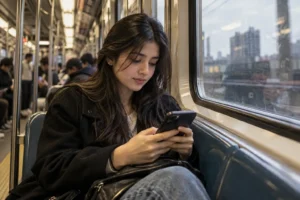
Quiet, low-energy candid moments like this are useful when you want realism without motion or expression extremes.
Anchor the subject’s likeness to the attached reference image. Generate a candid photo of this person sitting on a subway train, looking down at their phone, soft overhead fluorescent light mixed with window daylight, reflections faintly visible in the train window, other passengers blurred in the background. Shot on a 35mm lens, slightly grainy, muted urban color palette, documentary street photography style.
Best for: Urban lifestyle and city-life content.
18. Crossing the Street in the Rain

Weather adds a natural reason for imperfect posture and expression, which is useful when a prompt keeps coming out too clean.
Keep this person looking exactly like the attached photo, face and all. Generate a candid street photo of them crossing a rain-soaked city street holding an umbrella, mid-step, reflections of streetlights visible on the wet pavement, slightly hunched against the wind. Shot on a 35mm lens at dusk, cool blue-toned lighting, shallow depth of field, cinematic but realistic street photography style.
Best for: Moody editorial and seasonal content.
Everyday Lifestyle Prompts
19. Morning Coffee, Unmade Bed

Domestic clutter and an unguarded moment together create one of the most reliably “unposed” combinations available.
Pull the face and features straight from the attached photo without modification. Generate a candid photo of this person sitting on the edge of an unmade bed in the morning, both hands wrapped around a coffee mug, looking out a nearby window, soft messy hair, natural morning light streaming in. Shot on a 50mm lens, warm tones, shallow depth of field, slice-of-life documentary photography style, no eye contact with the camera.
Best for: Personal blogs and slow-living content.
20. Cooking Pasta, Steam Rising

Steam and motion in the environment add texture that a static posed shot can’t replicate, and they reinforce the sense of a real moment happening in real time.
Let the attached photo define this person’s face and skin tone throughout. Generate a candid kitchen photo of them stirring a pot of pasta on the stove, steam rising and slightly softening the focus, mid-conversation with someone off-frame, sleeves rolled up. Shot on a 35mm lens, warm tungsten kitchen lighting mixed with daylight, natural clutter on the counter, lifestyle documentary photography style.
Best for: Food and home lifestyle content.
21. Dog on the Couch
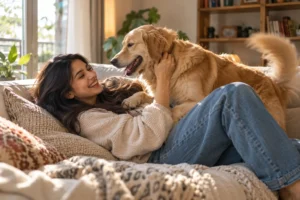
Pet interactions almost always read as candid because the animal’s behavior is unscripted, which pulls the human’s expression along with it.
Keep this person’s appearance consistent with the attached reference photo. Generate a candid living room photo of them lying on a couch playing with a dog, both mid-motion, the dog’s tail blurred from wagging, genuine open-mouthed laughter, soft afternoon light through a nearby window. Shot on a 35mm lens, shallow depth of field, warm natural tones, unposed lifestyle photography style.
Best for: Pet brand content and everyday-life feeds.
Professional and Work Prompts
22. Mid-Meeting Laugh

Even professional content benefits from unposed direction — a candid moment reads as more trustworthy than a lineup of smiling employees.
Model this person on the attached photo, keeping their face unchanged. Generate a candid office photo of them around a whiteboard with coworkers, mid-laugh at something a colleague just said, natural office lighting from large windows. Shot on a 35mm lens, shallow depth of field, realistic skin tones, no one posing for the camera, documentary corporate photography style.
Best for: Team pages and “about us” imagery.
23. Artist Focused in the Studio
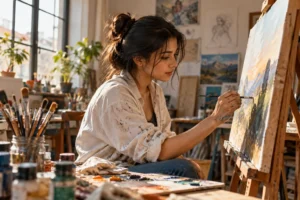
A subject deeply focused on a task produces a naturally serious, unguarded expression that a “look confident at the camera” prompt rarely achieves.
Hold this person’s face and proportions to what’s shown in the attached photo. Generate a candid photo of them working at an easel in a sunlit studio, fully absorbed in the canvas, paint-stained hands, unaware of the camera, brushes and supplies scattered on a nearby table. Shot on a 50mm lens, natural side light from a large window, shallow depth of field, documentary portrait photography style.
Best for: Creative portfolios and maker-focused branding.
Travel Prompt
24. Checking the Map on a Side Street

A small practical task, like reading a map, gives the subject a natural reason to look down and away from the lens.
Ground this person’s likeness in the attached reference photo, nothing altered. Generate a candid travel photo of them standing on a narrow European side street, looking down at a paper map, slightly turned away from the camera, backpack on one shoulder, warm afternoon light bouncing off surrounding buildings. Shot on a 35mm lens, shallow depth of field, documentary travel photography style, natural unposed body language.
Best for: Travel blogs and destination marketing.
How to Use These Prompts
Every prompt above already includes a reference-photo instruction, so the basic workflow is simple: upload your photo to the tool, paste the prompt, and generate. A few tool-specific notes make the results more reliable:
- Gemini’s Nano Banana: Attach your reference photo first, then paste the prompt as written. If results drift toward a painterly or overly smooth look, add “generate a photograph, not an illustration” right after the opening identity instruction.
- ChatGPT image generation: Upload the photo in the same message as the prompt. ChatGPT sometimes rewrites prompts internally, so keep the identity-preservation line near the very start rather than the end, so it doesn’t get diluted.
- Tools without reference-photo support (Midjourney and similar): If your tool only accepts text, drop the opening identity-reference sentence and replace “this person” or “them” with a written description instead, such as “a woman in her late 20s with shoulder-length brown hair.” Everything else in the prompt works exactly the same way.
Customization Tips
- Swap the setting, not the structure. Change “park at golden hour” to “rooftop at sunset” or “kitchen in the morning,” but keep the action and the broken eye contact — that’s what carries the unposed feel.
- Match aspect ratio to platform. Use a square or 4:5 ratio for Instagram feed posts, 9:16 for Stories and Reels covers, and a wider 3:2 or 16:9 ratio for blog headers and banners.
- Adjust the lens language for mood. A 35mm or 24mm lens reference pulls in more environment and reads as more documentary. An 85mm reference isolates the subject more and feels closer to a traditional portrait, even when the pose is candid.
- Change the light for the season or time of day. “Golden hour” and “soft window light” are warm and forgiving. “Overcast daylight” and “cool blue-toned light” shift the same prompt toward something more editorial or moody.
Common Mistakes With Unposed Prompts
- Only using the word “candid” without backing it up. The word alone doesn’t do much. Pair it with a specific action, a broken gaze, or an off-center composition, or the model tends to default back to a centered, camera-aware pose anyway.
- Describing an emotion without a cause. “Happy” and “smiling” produce generic results. “Laughing because they just heard a joke” or “smiling while watching someone else across the room” gives the model a reason, which shows up in the expression and posture.
- Keeping perfectly centered, symmetrical framing. Even with a candid action described, dead-center composition still reads as staged. Mention an off-center or three-quarter framing when it fits the shot.
- Stacking too many lighting and style terms at once. Combining “cinematic lighting, dramatic shadows, golden hour, studio flash, film grain” in one prompt confuses the model. Pick one lighting direction and one photographic style, and let those carry the whole image.
- Forgetting to ask for natural imperfection. Overly smooth skin, symmetrical features, and flawless lighting are what make an image read as artificial. If results keep looking too perfect, add a line asking for natural skin texture and imperfect, realistic detail.
Frequently Asked Questions
What does “unposed” mean in an AI photo prompt?
It means writing the prompt so the subject appears to be doing something or reacting to something, rather than standing still and facing the camera. The most reliable way to signal this is through action, broken eye contact, and a specific reason for the moment, not just the word “candid” on its own.
Do these prompts work with Nano Banana, ChatGPT, and Midjourney?
Yes. As written, they’re built for tools that accept a reference photo, like Nano Banana and ChatGPT image generation. For text-only tools like Midjourney, the “How to Use These Prompts” section above shows the one-line change needed to adapt them.
Why does my AI photo still look posed even when I ask for candid?
Usually because the prompt states the word “candid” without giving the model an action, a reason for the expression, or a broken gaze to work with. Reread the “What Actually Makes a Prompt Look Unposed” section above and add at least two of those four elements.
Will using a reference photo change how I actually look?
It shouldn’t, as long as the prompt includes an identity-preservation instruction, which every prompt in this article does. If a tool keeps altering your features anyway, try a clearer, well-lit reference photo and repeat the instruction a second time near the end of the prompt.
What aspect ratio should I use for social media?
A 4:5 or 1:1 ratio suits Instagram feed posts, 9:16 works for Stories and Reels covers, and a wider 3:2 or 16:9 ratio is better for blog headers, banners, and Pinterest-style graphics.